
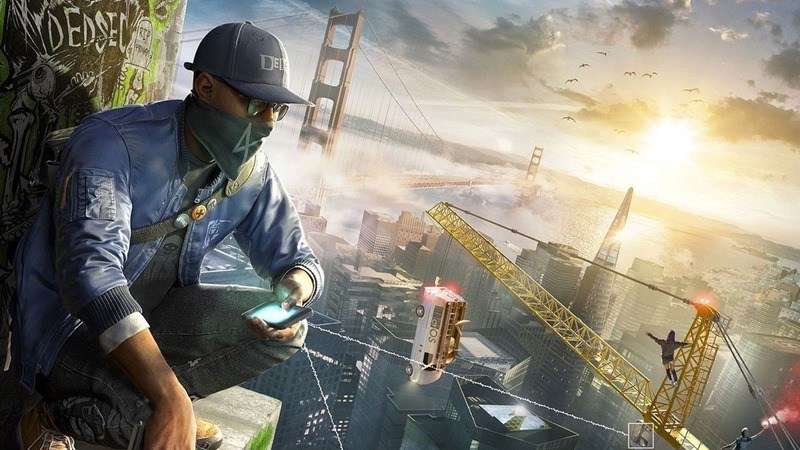
“We just lost the best GTA-like series ever made.” That’s how one fan lamented recent news about the Watch Dogs franchise. According to reputable insiders, Ubisoft has shelved the Watch Dogs IP, calling it “completely dead” internally. It’s a somber end for a series that began with sky-high ambitions of blending open-world action with high-tech intrigue.
How did we go from the thrill of being a vigilante hacker in 2014 to a point where Watch Dogs has effectively been put out to pasture in 2026? The answer, many argue, lies in a drastic tonal shift and a loss of identity that plagued the series over its three installments. This retrospective will explore the rise and fall of Watch Dogs, tracing how it went from a gritty vigilante fantasy to a franchise that seemingly lost its audience by trying to be something it wasn’t.
The Rise: A Vigilante Hacker Thriller with Promise
When the original Watch Dogs launched in 2014, it was riding a wave of hype. Ubisoft presented it as a bold new IP: an open-world game in the vein of Grand Theft Auto, but with a twist – you played as a tech-savvy vigilante wielding a smartphone as a weapon. The protagonist, Aiden Pearce, was a brooding anti-hero in a trench coat, out for revenge after a family tragedy. The game’s tone was dark, moody, and (at least in marketing) grounded in a sort of cyberpunk-meets-crime-thriller reality. Players were promised the ability to hack the city of Chicago itself, controlling traffic lights, security cameras, and personal data to bring criminals to justice or chaos.
While Watch Dogs’ gameplay execution had mixed reviews (some criticized repetitive missions and a graphical downgrade from its E3 demo), it undeniably established a unique identity. This was a world where you could be the puppet master of a city’s infrastructure – a one-man vigilante surveillance state, walking the line between hero and criminal. In fact, the first game even featured a rudimentary morality system (your reputation would suffer if you harmed civilians, for instance), reinforcing that Aiden Pearce was an anti-hero who could sway between right and wrong. The narrative and atmosphere took themselves seriously. It wasn’t perfect, but it resonated with many players who enjoyed the idea of a lone watchdog in the shadows, dealing out justice with both gunplay and gadgetry.
Commercially, Watch Dogs was a hit – it broke sales records at launch and by some reports sold over 10 million copies in its first year, proving there was a huge appetite for this concept. Ubisoft had successfully launched a new franchise, and a sequel was inevitable. The big question was: how to build on the foundation of Watch Dogs and address its flaws? The stage was set for Watch Dogs 2 to refine the hacking gameplay and perhaps inject a bit more personality. Ubisoft did exactly that, but in doing so, they would also begin to drift from what made the original game’s vibe unique.
The Shift: Watch Dogs 2 – Lighter Tone, Mixed Reception
In 2016, Watch Dogs 2 arrived and surprised players by flipping the script. Gone was the cold Chicago atmosphere and Aiden’s gruff vengeance story. In its place, Ubisoft gave us Marcus Holloway, a young hacker in the Bay Area, and a crew of hipster hacktivists called DedSec. The entire aesthetic did a 180: Watch Dogs 2 was colorful, irreverent, and filled with Silicon Valley satire. The characters were pranksters and idealists, fighting “the Man” (a Google-like tech giant, corrupt politicians, etc.) with wit and flashy gadgets. The soundtrack thumped with upbeat tracks, and the game’s marketing leaned into the fun – you could do things like make a “viral video” in-game or call in prank police raids.
Critically, Watch Dogs 2 earned a lot of praise. Gameplay-wise, it improved on many fronts: more non-lethal options, better driving, a less dour protagonist, and a truly vibrant rendition of San Francisco to explore. Yet, the tonal whiplash was evident, and not everyone was on board. Fans of the first game’s gritty vibe found Watch Dogs 2 almost too lighthearted. The disconnect between story and gameplay also grew more stark: Marcus and his friends come off as jovial Robin Hood types, but players could still have them wield guns and wreak lethal havoc on a whim. “The tone shift was too much. I just couldn’t picture that particular protagonist killing people, yet he was able to,” one player noted of Marcus, arguing the game would have made more sense if it forced non-lethal methods. Another fan pointed out the jarring contrast: “In the first one, you’re a brooding anti-hero… In the second one you’re a fun-loving hacker… and you do this by printing guns and setting people up to be executed by gangs or the police, with zero consequences or judgment.”. The narrative tried to balance zany humor with serious stakes (there’s a plotline where a friend is killed, followed by a sudden pivot back to upbeat hacker antics), leading to moments of tonal dissonance.
There was also an undercurrent of social commentary in Watch Dogs 2 – it tackled issues like data privacy, government surveillance, and even had subtle nods to movements (the main character can don a t-shirt referencing protests, etc.). Yet Ubisoft, perhaps wary of being too political, mostly kept the story in the realm of exaggerated fiction (satirizing an over-the-top evil tech CEO, for example). Still, some players perceived it as inching towards a more “woke” or politically correct direction in terms of theme. The series that started as a personal vigilante tale was now more of a millennial hacker protest story. This change attracted new fans who appreciated the humor and modern, youthful vibe – Watch Dogs 2 quietly became a cult favorite for many – but it also alienated a portion of the original audience who missed the somber, high-stakes feel of Aiden Pearce’s journey.
One thing was clear: Watch Dogs 2 did not grab the mass audience the way the first game’s marketing did. Its sales at launch were significantly lower than Watch Dogs 1 (in fact, Ubisoft publicly noted a slow start, though the game eventually reached a respectable player count over time). The franchise’s momentum had cooled. For the next installment, Ubisoft faced a challenge: how to regain broad excitement. The path they chose for Watch Dogs 3 (titled Watch Dogs: Legion) would be the most ambitious – and arguably most misguided – yet.
The Fall: Watch Dogs Legion – Identity Crisis and Political Overtones
Watch Dogs: Legion launched in 2020 and represented another radical reinvention of the series formula. Set in a near-future London under heavy surveillance and authoritarian rule, Legion’s big hook was “play as anyone.” Rather than a defined protagonist, the game allowed players to recruit virtually any NPC in the world into DedSec and control them. Grandmother on the street? A getaway driver? A spy? They all could be on your team. It was an intriguing concept that unfortunately came at the cost of a cohesive narrative. With no single main character, the story struggled to give players emotional investment. As one critique quipped, “being able to play as any NPC – meaning there are no concrete protagonists and no narrative leads to hook onto – finally answered the age old question: ‘what is the worst way to write a story?’”. This might be a bit tongue-in-cheek, but it underscores how Legion’s core design undermined the franchise’s storytelling, leaving the experience feeling hollow for many. Even some who initially loved Watch Dogs 2’s characters found Legion’s rotating cast “empty” by comparison.
Legion also leaned heavily into the political messaging that Watch Dogs 2 had flirted with. In Legion, DedSec is essentially a resistance movement battling a tyrannical private security force and a surveillance state. The game’s marketing tagline “Resistance has evolved” positioned players as revolutionaries. To some, this felt like a logical extension of the vigilante theme – after all, what’s a bigger vigilante fight than overthrowing a corrupt regime? But to others, it was off-putting. The comment that “it went from being an interesting vigilante series to you basically being ANTIFA & nobody bought it” was a pointed (if a bit exaggerated) expression of how certain gamers felt about Legion’s tone. By casting the player as a collective of anarchic freedom-fighters, Ubisoft seemingly crossed into explicitly political territory, and that can be polarizing. Some gamers simply didn’t want a Watch Dogs game that made them feel like they were enacting a political agenda; they wanted the personal vigilante fantasy back.
The reception of Legion was lukewarm. It earned mixed reviews and, more worryingly for Ubisoft, failed to gain long-term traction with players. The ambitious “play as anyone” mechanic, while innovative, resulted in repetitive mission design (since the game couldn’t tailor missions to a specific character, many tasks felt generic). The world of London was detailed, but the absence of a strong central character left it lacking heart. Sales-wise, Legion underperformed expectations – an insider from Ubisoft directly attributed the franchise’s shelving to Legion’s poor financial performance and inability to meet the company’s hopes. In essence, Legion was the breaking point. It attempted to be a grand evolution of Watch Dogs but instead highlighted how far the series had strayed from what fans originally loved.
As of early 2026, multiple sources (such as Tom Henderson via Insider Gaming) report that “as far as [they’re] aware, the Watch Dogs IP is completely dead” inside Ubisoft. No new Watch Dogs game is in development; the series has been quietly put on the shelf. It’s a striking outcome for a franchise that, not too long ago, was touted as one of Ubisoft’s tentpole properties.
Why Watch Dogs Lost Momentum: A Franchise Mismanaged
Tracing the arc from Watch Dogs (2014) to Watch Dogs Legion (2020), a clear pattern emerges: Ubisoft kept changing what Watch Dogs was – perhaps in search of a broader audience or in reaction to the previous installment’s criticisms – but in doing so, they never let the series establish a consistent identity. The first game was serious and somber, the second irreverent and youthful, the third experimental and overtly political. It’s almost as if each game was made for a different audience. This is not a recipe for building a loyal fanbase.
What made matters worse is that each shift came with trade-offs that disappointed some segment of players:
- From Personal to Political: The heart of Watch Dogs (the original) was Aiden’s personal vendetta, giving players a clear, relatable motivation. By Legion, the story became a broader social struggle. That can work (many games have done political narratives well), but Watch Dogs never laid the groundwork to earn that shift. It felt jarring – the series went from vigilante justice to hacktivist collective to full-blown resistance movement. Longtime fans who enjoyed the personal vigilante angle suddenly found themselves leading a faceless revolution, which wasn’t what they signed up for.
- Tonal Inconsistency: Ubisoft’s attempt to “brighten up” Watch Dogs 2 in response to criticism of Watch Dogs 1’s dreariness was well-intentioned. However, they may have overcorrected. Watch Dogs 2’s tonal mix of goofy and serious left some players with whiplash. A franchise can certainly evolve its tone (see Grand Theft Auto’s journey from satirical to even more satirical-but-story-driven), but it usually retains a core vibe. Watch Dogs didn’t – each entry felt like a reaction to the last rather than a continuation. This inconsistency meant that winning over new fans often came at the cost of alienating existing ones.
- Gameplay Gimmicks Over Core Strengths: “Play as anyone” in Legion was a headline-grabber, but ultimately a gimmick that undermined story and character development. It’s a classic case of a feature that sounded great on paper but hurt the game’s depth. Similarly, Watch Dogs 2 introduced a ton of zany tools (like RC cars, drones, etc.) which were fun, but perhaps distracted from the core appeal of social stealth hacking. Each sequel added more systems (character swapping, more combat options) that diluted the stealthy, hacking-centric gameplay that defined the original. By Legion, gunplay and brawling in a dystopian London took center stage, making the game feel more like a Far Cry with gadgets than the stealth-hacker formula players initially loved. The identity of Watch Dogs had become muddled.
- Ubisoft’s Broad Brush: It’s worth mentioning Ubisoft’s overall strategy during the 2010s and early 2020s. They often chased trends and tried to infuse their open-world games with every popular element possible. Watch Dogs suffered a bit from this “kitchen sink” approach. The first game rode the post-Edward Snowden zeitgeist about surveillance. The second tapped into youthful anti-establishment and meme culture. The third leaned into dystopian fiction and procedural generation of characters. It’s as if Ubisoft couldn’t decide what the core of Watch Dogs was – hacking? social commentary? urban open-world chaos? – and so each installment emphasized a different facet. Meanwhile, competing open-world games (like GTA V, which ironically outlived the entire Watch Dogs series in terms of ongoing popularity) doubled down on their strengths and remained tonally consistent.
In the end, Watch Dogs lost momentum because it lost the trust of its audience. After the first game’s hype backlash (remember the graphical downgrade controversy and some disappointed players), many were skeptical. Watch Dogs 2 earned goodwill from critics and those who played it, but not enough people did play it initially – perhaps due to that skepticism and the identity shift. Legion tried to win lapsed players back with a flashy new concept, but by then the franchise’s identity was so diluted that it failed to resonate strongly with any particular group.
Lessons from the Demise of Watch Dogs
It’s a shame to see Watch Dogs fade away, because the premise of the series is one that remains uniquely compelling. The idea of using modern technology as both weapon and weakness in an open-world has so much potential. However, the execution over the trilogy shows the importance of having a clear creative vision and audience for a franchise.
As Ubisoft moves forward, the “death” of Watch Dogs may or may not be permanent. Franchises have a way of reviving if there’s enough demand or a fresh idea down the line. But for now, Watch Dogs serves as a cautionary tale. The franchise lost its way when it lost sight of its identity. What began as a vigilante power fantasy got tangled up trying to be a do-it-all statement about society, and in the process, it lost many of the people who just wanted to feel like a clever vigilante hacker. In a market where games like GTA continue to thrive by staying true to themselves (and where new competitors emerge), not knowing your niche can be fatal.
Ubisoft reportedly has multiple other projects and is restructuring heavily. Perhaps focusing on their stronger franchises (Assassin’s Creed, Far Cry, etc.) is the priority now. It’s still a bit sad to “lose” Watch Dogs – the series had moments of greatness and a distinct flavor. But then again, this is Ubisoft. In the same breath that they’ve kept an old series on life support for a decade (Beyond Good & Evil 2), they’ll nix another project that might have had a future if handled differently.
For fans of Watch Dogs, all we can do now is look back at what was and wonder what might have been. And if there’s a lesson for game makers, it’s this: don’t confuse your audience. If you’re going to evolve a franchise, carry its soul forward. Otherwise, you risk ending up like Watch Dogs – a game that, in trying to be everything, ended up being nothing. The watchdogs have been put to sleep, at least for now.


.svg)