
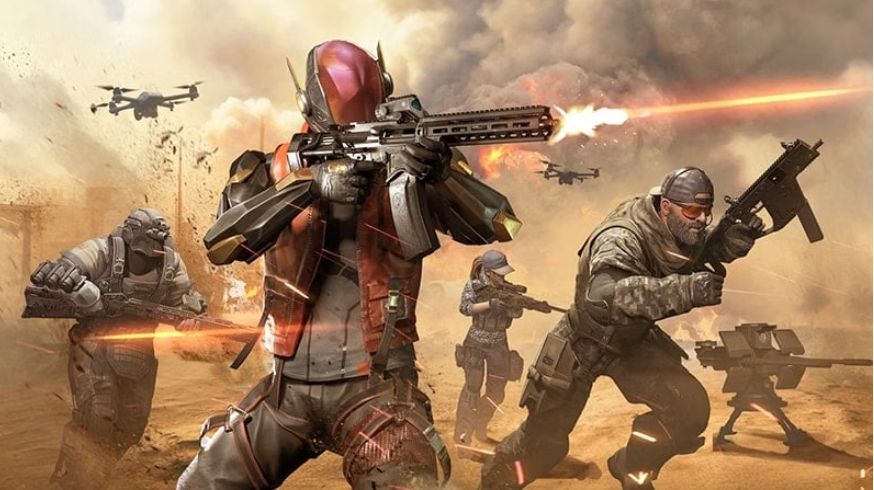
When it comes to climbing the competitive ranks in Blood Strike, skill alone isn’t enough – you also need the right tools and settings. In this guide, we’ll walk you through the best loadouts and optimal sensitivity settings for ranked play, all tailored to the 2026 meta. Whether you’re a battle royale veteran or a newcomer aiming to go pro, having meta-ready loadouts and dialed-in controls will give you a crucial edge. We’ll cover which weapons dominate the current ranked scene, how to kit them out for maximum performance, and how to tweak your sensitivity (whether on mobile or PC) for lethal accuracy.
The 2026 Meta at a Glance: Accuracy is King
Every new season or major update can shift the meta, and as of early 2026, Blood Strike’s meta favors accuracy and low recoil more than ever. A January 2026 update, for example, introduced a Restore Energy mechanic (allowing players to recover health/armor during fights) which heavily rewards landing shots consistently. Prolonged gunfights are now more common, and the winner is usually the one whose weapon is steady and precise throughout the encounter. As a result, low-recoil loadouts dominate the ranked ladder – if you can beam your opponent with minimal spread, you’ll down them before they can exploit any healing or cover.
What does this mean in practical terms? It means weapons like high-stability SMGs and LMGs have become top-tier picks. For instance, the PP-19 Bizon (SMG) and RPK (light machine gun) are standout choices in the current meta. These guns, when properly configured, offer a lethal combo of fire rate, damage, and laser-like recoil control. A fully kitted Bizon can maintain 34–47% accuracy at 15m (which is huge for an SMG), thanks to the right attachments that steady its recoil. Meanwhile, an RPK with meta attachments boasts an eye-watering 0.37 second time-to-kill at mid-range, shredding opponents almost instantaneously if you hit your shots.
The emphasis on accuracy doesn’t mean raw damage or fire rate isn’t important – it’s about balance. The best guns in 2026 balance decent damage per shot with controllability. A weapon that kicks like a mule might dish big damage, but if half your bullets miss, it’s no good in a ranked duel where the enemy can heal or reposition. This is why moderate fire-rate, low-recoil weapons have edged out pure high-DPS but hard-to-control guns. As evidence, competitive players have been gravitating to guns that achieve recoil control values in the 40–70 range, which indicates very stable performance. In tournaments and qualifiers, most loadouts center around that principle – keep your gun stable, and the kills will come.
To sum up the meta: precision and control are paramount. Aggressive play is rewarded only if you can land your shots reliably. So our guide to loadouts will focus on builds that maximize stability (without sacrificing too much damage or mobility), and our tips on sensitivity will ensure you can aim true and track targets with ease.
(One quick note: If you’re eager to unlock certain weapons or attachments quickly to keep up with the meta, consider the resources available to you. Some players invest in the Elite Strike Pass or purchase gold for upgrades – if you go this route, make sure to use trusted top-up sources like the Carry1st Shop for safe, instant delivery of in-game currency.)
Best Loadouts for Blood Strike Ranked Play (2026 Edition)
Now let’s get into specific loadouts. We’ll highlight a few meta loadouts that cover different ranges and playstyles, so you can pick what fits your role or switch depending on the map and team strategy. Each loadout recommendation will include the weapon choice and the key attachments to equip for peak performance.
1. Close-Range Slayer – Bizon SMG (Low-Recoil SMG Build)
If you love to get in enemies’ faces or frequently find yourself in close-quarters battles, the Bizon SMG loadout is a top choice. The PP-19 Bizon has become known as a “close-range laser” in the current meta. Its strengths include a high fire rate (about 750 RPM) and a large default magazine, which can be expanded with the right mag attachment. With the proper setup, the Bizon barely kicks, allowing you to hold down the trigger and maintain tight groupings on target.
Recommended Attachments: To transform the Bizon into a laser beam, focus on attachments that enhance recoil control and stability:
- Muzzle: Compensator – Reduces muzzle climb significantly, keeping your barrel from drifting upward during sprays.
- Underbarrel: Recoil Control Grip (or Vertical Foregrip) – Further tamps down vertical recoil and steadies your aim.
- Barrel: Range Extension Barrel – Extends effective range a bit and can tighten bullet spread, so your damage doesn’t fall off too fast in mid-range skirmishes.
- Stock: Mobility-Stability Balance Stock – A hybrid stock that helps with stability while aiming (ADS) without sacrificing too much mobility. It’s crucial for keeping that recoil in check when strafing and shooting.
- Magazine: 32-Round R.I.P. Drum – Increases mag capacity by 33% (from 24 to 32 rounds), which is fantastic for securing multi-target engagements or finishes without reloading. The added weight slightly helps recoil too, though at the cost of a tiny slowdown in aim-down-sight (ADS) speed (a worthy trade-off in ranked where missing bullets is riskier than a minor ADS delay).
With this setup, players have achieved ~40% recoil control ratings on the Bizon, meaning the gun’s spread and climb are extremely low. In practice, you can spray 30+ bullets and have most stay on target up to 15–20 meters – enough to delete an enemy or even two without letting go of the trigger. The Bizon’s time-to-kill (~1.1 seconds within 10–15m in optimal conditions) might not be the absolute fastest, but because you’re likely hitting every shot, it effectively outpaces higher DPS guns that miss half their shots. Always remember: in close range, missing shots is a bigger sin than a slightly lower DPS. The Bizon loadout ensures you miss as few as possible.
Playstyle Tips: Use the Bizon to aggressively push in urban areas, building interiors, or tight corridors. Hip-fire is surprisingly accurate with this build, so abuse it when you’re under 10 meters – you’ll maintain full movement speed while spraying. At 10–20 meters, quick ADS and burst if needed; though with such low recoil, you can often get away with full-auto ADS even at mid range. Just be careful not to overextend alone – an SMG shines in 1v1 or 1v2 fights, but you don’t want to get caught in the open by a long-range weapon. If you’re carrying the Bizon, consider pairing it with a mid-range option (like an AR or marksman rifle) for versatility (more on that below).
2. Mid-Range Bruiser – KAG-6 Assault Rifle (Versatile AR Build)
For those who prefer balanced combat or like to anchor fights from moderate distance, the KAG-6 assault rifle is a meta workhorse. In 2025 and heading into 2026, the KAG-6 has been widely used (one stat showed a 70% usage rate among top players) due to its versatility. It has solid base damage (around 18 per shot), a decent fire rate, and scales incredibly well with attachments. Think of the KAG-6 as the all-rounder that can adapt to most situations – it doesn’t excel in ultra-close like an SMG or super-long like a sniper, but it’s very strong in the 20–50 meter range engagements common in ranked play.
Recommended Attachments: To optimize the KAG-6 for ranked:
- Muzzle: Compensator or Muzzle Brake – We recommend a Compensator (especially at higher levels like Level 38 unlock) for maximum recoil reduction. It keeps the rifle steady during full-auto fire.
- Underbarrel: Extended Vertical Grip – At max level (Level 40), this grip provides the largest stability boost for the KAG-6, making sustained fire extremely accurate.
- Barrel: Heavy Barrel (longer barrel) – Increases effective range and tames horizontal recoil. Since AR fights often start at mid distance, the range boost helps maintain damage and the added weight steadies your aim.
- Stock: Adjustable Tactical Stock – This is a preference slot, but a stock that balances recoil control with ADS speed is ideal. The KAG-6 benefits from a bit of extra stability, but you don’t want to slow its aim too much. A tactical stock often gives you some recoil control while keeping you snappy.
- Optic: (Optional) Red Dot or Holographic – The iron sights on KAG-6 are okay, but a clear optic can improve target acquisition at range. Red Dot provides a clean picture for tracking moving targets at 30+ meters.
- Magazine: If you find yourself in heated fights, a larger mag (say +10 rounds) can be useful, but it’s not as critical as on SMGs. The default mag might suffice for most solo fights; just be mindful of cover when reloading.
This KAG-6 setup yields a great balance: manageable recoil, respectable damage, and flexibility. With attachments, players report achieving around 30 range and 38 accuracy stats on KAG-6 – meaning your bullets hit hard at range and your grouping stays tight. It’s capable of downing enemies in just a few bursts at mid distance. The KAG-6 also doubles as a close-range defender in a pinch – while not as swift as an SMG, its stability means if an enemy rushes you, you can hold fire and likely win if you land headshots.
Playstyle Tips: Use the KAG-6 to hold medium ground – e.g., guarding a building perimeter, holding an overwatch position while teammates push, or engaging enemies moving between cover. Always aim to start fights in ADS at 30–40m where KAG-6 gives you an advantage over SMG-toting rushers. Burst fire in longer ranges to reset recoil (the first ~5 bullets will be laser-accurate; after that, moderate recoil kicks in, so fire in controlled bursts for distant targets). At closer range, if surprised, don’t be afraid to hip-fire – with a vertical grip, KAG-6 hip-fire can still be effective within ~10m. Also, try to carry a secondary that complements it. Many players pair KAG-6 with a close-range weapon (like the P90 or a shotgun) for a combo approach: use the AR to chip and weaken foes at mid range, then switch and rush to finish them off when appropriate.
(A side note on ammo and team roles: if you run a KAG-6 and a secondary like an SMG, be mindful of ammo types. KAG-6 uses rifle ammo (5.56mm), P90 uses SMG ammo (9mm). Managing two ammo types can be tricky but also means you have more total ammo to scavenge. Coordinate with squadmates – e.g., one takes sniper ammo, you take AR, another takes SMG – so you’re not all competing for bullets.)
3. Suppressive Firepower – RPK LMG (High-Stability LMG Build)
If you prefer a heavier playstyle, laying down suppressive fire and anchoring team fights, the RPK light machine gun is your friend. The RPK in Blood Strike’s current meta is a monster for mid- to long-range engagements when configured properly. It hits hard (body damage around 34, headshot double that) and has a moderate rate of fire (~650 RPM). With the right attachments, you can turn the RPK into a virtually no-recoil turret that deletes enemies who peek for too long.
Recommended Attachments: To maximize the RPK:
- Barrel: Extended Barrel – Increases effective range (the RPK’s Level 20 Extended Barrel gives +18% range) so your damage stays high at distance, and it often adds some recoil stability due to the length/weight.
- Underbarrel: Extended Vertical Grip – As with ARs, an extended vertical grip (ideally the highest level you have) will chop a huge portion of vertical recoil off. On RPK, it’s practically mandatory to maintain accuracy during long bursts.
- Muzzle: Compensator – LMGs benefit massively from compensators. Equip the best compensator available to reduce both vertical and horizontal recoil. This helps keep your sustained fire on target.
- Stock: Balanced Stock – The RPK’s balanced or tactical stock options can improve stability while not hurting ADS too much. One recommended option gives +12% ADS time but greatly stabilizes recoil – a worthwhile trade for an LMG, since you plan to pre-aim anyway.
- Magazine: The base mag on RPK is large, but if there’s an option to increase it without huge downsides, it can be considered. Generally, 75 rounds (for example) vs 50 can let you suppress longer. But watch out for reload time; extended mags can make reloads very slow on LMGs.
With these attachments, the RPK achieves very high stability. Reports show that with full attachments, RPK can reach a Time-to-Kill of ~0.37s at mid-range (a theoretical value assuming shots land on chest/head). More importantly, its damage doesn’t drop off quickly thanks to the range boosts. This means you can confidently take duels at 50+ meters and still chew through an opponent’s armor and health in a split second if you stay on target. The low recoil ensures that you do stay on target – many players describe the fully kitted RPK as having “laser-like” accuracy for an LMG.
Playstyle Tips: The RPK suits a more methodical approach. You should play a position where you can see enemies coming and pre-aim, rather than fast-peeking corners. Think of yourself as the team’s suppressive fire or anchor. For example, in a squad situation, you might hold an angle overlooking an objective or the circle’s edge while your teammates move. Anyone who exposes themselves, you start showering them with bullets – the continuous fire can pin them down or force them to retreat. Even if you don’t get the knock immediately, you’ll likely break their armor, making it easy for teammates to clean up.
Do keep in mind: mobility is not the RPK’s forte. Moving while ADS (aiming) will be slow, so it’s often best to drop-shot or mount yourself behind cover when firing. Also, reload often and at smart times. The RPK’s reload is long; you don’t want to be caught swapping mags in the middle of a push. A good strategy is to fire in bursts of 10-20 rounds, take a breather (if target is down or in cover) to reposition or reload, then continue. You have the luxury of a big mag, but you don’t have to mag-dump all 50-75 rounds every time – sometimes short controlled volleys preserve ammo and keep you ready if a second enemy pops up.
4. Precision Eliminator – Kar98k Sniper (High-Accuracy Sniper Build)
Lastly, for players who favor long-range takedowns or want to support their team with high-damage picks, a sniper loadout can be very effective in ranked – especially in the slower-paced endgame circles. The Kar98k bolt-action sniper stands out because it combines one-shot headshot potential with relatively fast handling. In the current meta, sniper rifles are less common than ARs/SMGs, but a well-placed headshot from a Kar98k can instantly swing a fight in your favor.
Recommended Attachments: To maximize the Kar98k for competitive play:
- Muzzle: Precision Suppressor – A suppressor keeps your shots off the mini-map and reduces sound, which is great for sniping. The precision suppressor variant also tightens bullet spread and doesn’t hurt damage. Win-win.
- Barrel: Sniper Rifle Barrel – Typically a longer barrel that maximizes bullet velocity and range. It ensures your shots hit where you aim with less bullet drop – crucial for long distance sniping.
- Stock: Sports Cheek Riser or similar – This helps with aiming stability (less sway) and can improve recoil recovery (important for bolt-actions so you can realign faster after each shot).
- Magazine: Fast Reload Mag (5-round) – The Kar98k usually has 5 by default, but if there’s an attachment that speeds reload or chamber time, use it. Faster follow-up shots can secure a downed enemy or allow a second chance if you miss the first.
- Scope: Obviously, equip your highest zoom scope (8x or similar) for long-range efficacy.
With such a build, some players have managed to achieve the highest possible recoil control stat (up to 72 on Kar98k) – effectively meaning negligible weapon sway and recoil. While recoil control is less of a factor for bolt-actions (since you re-chamber between shots), the attachments also help with faster target reacquisition and steadiness. The Kar98k can down typical enemies in one headshot (if they don’t have a tier-3 helmet, etc.) or 2-3 body shots. With its high damage per shot, even hitting an arm or leg can chunk an opponent enough for your team to push or for you to finish with a follow-up.
Playstyle Tips: If you run a sniper like the Kar98k, you should also carry a secondary that covers close to mid range (such as an SMG or AR – any of the above recommendations). Use the Kar98k to initiate fights or provide overwatch. For instance, if you spot a squad rotating in the open, ping them for your team and take that opening headshot. A cracked or downed enemy creates chaos in the opposing team, allowing your squad to advance or reposition. When holding final-circle positions, a sniper lets you threaten peeking enemies without exposing yourself to close quarters. Just remember that a sniper loadout demands good positioning – high ground and cover are your best friends. Always have an exit plan in case someone closes the gap on you; that’s when you switch to your secondary (like a quick-draw SMG) to defend yourself.
Optimal Sensitivity Settings and Control Tips
Even the best loadout won’t save you if you can’t aim properly. That’s why dialing in your sensitivity settings is crucial for competitive play. In Blood Strike – which sees a mix of mobile and PC (emulator) players – finding the right sensitivity is a bit of a personal journey, but there are some pro guidelines we can draw from.
- Understand eDPI: First, a quick concept: effective DPI (eDPI) is a combination of your device’s DPI and in-game sensitivity. It’s a useful metric to compare sensitivities across devices. Many top Blood Strike players (especially on PC) gravitate towards an eDPI in the range of 400–600. This range provides a balance – not too twitchy, not too sluggish. For example, if you use 800 DPI on your mouse, an in-game sens of 0.5 (50%) gives an eDPI of 400; if you use 1600 DPI, an in-game sens of 0.25 (25%) yields the same eDPI. On mobile, eDPI is a bit trickier (since touch doesn’t use DPI in the same way), but you can approximate by considering your touch sensitivity settings equivalently.
- Pro Settings Examples: According to community insight, a common setup for skilled players is something like:
- Camera (free look) Sensitivity: ~60–80% on mobile, or a mid/low value on PC. This is your sensitivity when you’re not scoped in – it affects turning and looking around. You want this high enough to react quickly to flankers, but low enough to fine-tune your crosshair placement.
- ADS (aim down sight) Sensitivity: Slightly lower than camera sens. Many pros keep ADS sensitivity a bit lower so that when they’re aiming, especially with scopes, the aim isn’t too jumpy. For instance, if camera is 80%, ADS might be 60%. This allows you to track targets smoothly while firing.
- Sniper Scope Sensitivity: Even lower – perhaps 40–50% – to precisely adjust aim when fully zoomed.
- Gyroscope Sensitivity: If you play on mobile and use gyro aiming (tilting your device to fine-tune aim), a tip from competitive players is to set gyro sens 20–30% below your camera sensitivity. That means if cam is 80%, gyro might be around 50–60%. The idea is to use gyro for small “micro-adjustments” – such as compensating recoil or slight aim corrections – without it swinging your view wildly.
- Camera (free look) Sensitivity: ~60–80% on mobile, or a mid/low value on PC. This is your sensitivity when you’re not scoped in – it affects turning and looking around. You want this high enough to react quickly to flankers, but low enough to fine-tune your crosshair placement.
- Regional Preferences: Interestingly, there’s a note from community observations: “Asian pros use higher sensitivity, Western players prefer lower for recoil control.”. This suggests that some top players in, say, East Asia might crank their sens up to snap around quicker (relying on fast reflex flicks), whereas Western pros might lower theirs to make recoil handling and tracking easier. Neither is inherently better – it’s about what suits your style. Higher sens = faster turns and flicks, but harder to control for long sprays. Lower sens = easier to be precise, but you may struggle to turn on someone quickly. Find your comfort zone on that spectrum.
- Finding Your Perfect Sensitivity: The goal is to be able to do two things: 1) quickly acquire a target, and 2) stay locked on that target (tracking) especially if they’re moving. Here’s a practical drill to fine-tune sens, inspired by pro tips: In the training ground or a private match, take an automatic weapon (the SCAR rifle is a good benchmark gun) and fire 10-round bursts at a target ~50 meters away. Pay attention to where your bullets go:
- If your grouping is consistently off-center (e.g., always above or to the side of where you intended), your sensitivity or your recoil control technique might be off.
- Adjust your sensitivity incrementally (small steps) and repeat. The goal is to reach a point where you can keep a burst of bullets on a chest-sized target at 50m with minimal deviation. One metric: pro players tune until their bullet grouping “stays below 10% deviation” at that range, meaning nearly all shots land in a tight cluster relative to the aim point.
- If your grouping is consistently off-center (e.g., always above or to the side of where you intended), your sensitivity or your recoil control technique might be off.
- Also practice flicking: place two targets or use two training dummies, and try flick-aiming from one to the other. If you overshoot the second target, your sens might be a tad high; if you undershoot (can’t quite reach it fast enough), maybe increase sens. You want to reach a Goldilocks zone where you can comfortably snap to targets and also track a moving one without feeling either jittery or sluggish.
Final Thoughts
Finally, a brief word on monetization as promised: Blood Strike is free-to-play, and while you can unlock everything through gameplay, some players choose to spend money to speed things up (buying gold for weapon upgrades, or grabbing the Elite Pass for extra rewards).
If you decide to do this, do it smartly. Look out for promotions – for example, the Carry1st Shop offers bonus currency deals or discounts, which means more gold for your money.
Now, gear up and hit those ranked matches. With a low-recoil meta loadout in your hands and your sensitivity fine-tuned, you’ll find yourself winning more gunfights and climbing divisions. Stay focused, keep adapting (the meta can shift, so always be ready to tweak your loadouts), and most importantly – enjoy the process!


.svg)