
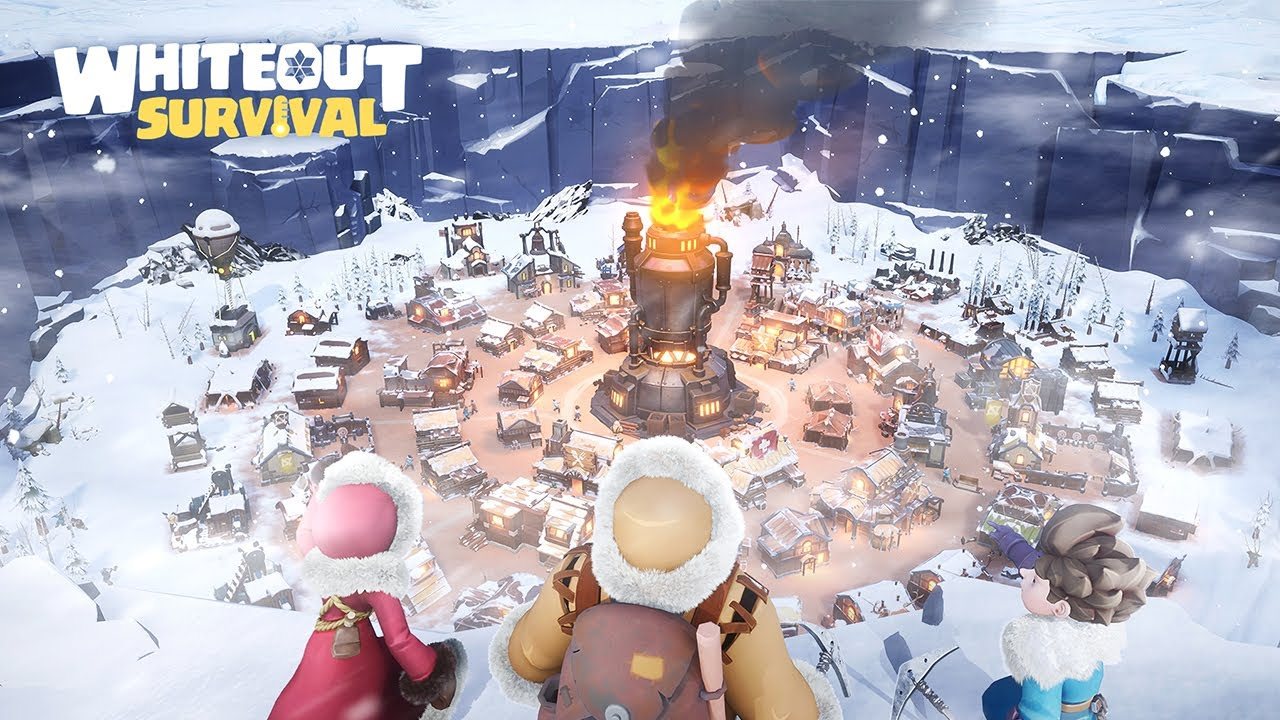
The premise of Whiteout Survival is the most immediately compelling hook in mobile strategy gaming right now: the world has frozen. Your settlement is the last pocket of warmth in an endless blizzard. The Furnace at your city's center is not a metaphor — it is literally keeping your survivors alive, and if it goes out, people die. That setup gives the game a tension that the usual city-builder genre rarely achieves, and it makes the core upgrade loop feel genuinely urgent rather than just mechanical.
But urgency is only useful if you understand what you're working toward. This guide covers the fundamentals of Whiteout Survival's progression, why the Furnace Level 30 milestone is the most important target in the game, and how to get there without making the mistakes that leave most settlements perpetually struggling.
The Core Loop: Heat Is Life
Everything in Whiteout Survival flows from one resource: heat. Your Furnace generates heat, heat keeps your survivors alive and active, and your survivors' activity generates the resources and fighters that let you upgrade the Furnace further. It's a feedback loop where progress is self-reinforcing — but so is stagnation. If your Furnace falls behind, everything else slows down, which makes it harder to upgrade the Furnace, which makes everything slow down further.
This matters more than in most city-builders because the game isn't just simulating growth — it's simulating survival against an active environmental threat. Blizzard events are server-wide emergencies where the cold intensifies and your settlement's heat output is tested directly. Players whose Furnace is underleveled when a Blizzard hits will struggle to maintain basic operations, let alone contribute to server-wide event rewards.
The cold isn't patient. Your upgrades should be.
The Three Buildings That Drive Everything
Whiteout Survival has a substantial building roster, but three structures sit at the foundation of every meaningful upgrade path.
The Furnace is your primary upgrade target and should be. Its level gates everything else: troop tiers, building access, research categories, and the base heat output your settlement produces. Every major milestone in the game is tied to Furnace level — which is why reaching Furnace Level 30 is the strategic target that competitive players talk about most. At 30, your settlement's capabilities shift dramatically. Troop capacity increases substantially, new building tiers unlock, and your ability to participate meaningfully in Alliance Wars and Blizzard events reaches a competitive level. Treat every session as progress toward this milestone.
The Academy in Whiteout Survival functions similarly to its equivalents in other mobile strategy games — it's where you research passive bonuses for your economy, military, and construction speed. But the Winter Research tree, specific to this game, is worth prioritizing early. Bonuses to heat production, cold resistance, and survivor efficiency are survival-critical in ways that standard city-builders' research trees aren't. Don't neglect military research, but don't skip Winter Research thinking it's secondary.
Construction Queues are the often-overlooked structural constraint on your development speed. Every settlement begins with one construction queue — one building can upgrade at a time. Unlocking the second Construction Queue is one of the highest-leverage investments in the entire game. With two queues running simultaneously, your development speed effectively doubles. The second queue is expensive and the unlock requirements are meaningful, but players who secure it early pull significantly ahead of same-age settlements still operating on a single queue.
Why Furnace Level 30 Changes Everything
The journey from Furnace Level 1 to Level 29 is important, but Level 30 is a genuine inflection point. Here's why it matters specifically:
At Level 30, you unlock Tier 5 troops — the military tier that competes in end-game Alliance Wars and server events. Before Tier 5, your army is essentially a development army: capable of resource gathering, defending against weak attacks, and basic event participation, but not built for serious PvP. T5 troops are the baseline for competitive play.
The Furnace Level 30 milestone also typically coincides with unlocking or reaching the final tiers of several key research branches, which means your stat bonuses from the Academy start hitting their highest values. The compound effect of T5 troops plus maxed research bonuses plus a high-level Furnace is what the top players in any server are working toward — and those at Level 30 have crossed the threshold into that group.
Getting there requires two things that most players underestimate: a consistent Speedup inventory and, ideally, a second Construction Queue active. Speedups cut the timer on upgrades that, at higher Furnace levels, stretch into days and weeks. A player with a strong Speedup supply and two queues running will reach Level 30 in roughly half the time of a player operating with one queue and no Speedup investment.
Blizzard Events: The Game's Most Important Recurring Test
Server-wide Blizzard events are Whiteout Survival's version of a world boss — a periodic test of the entire server's collective strength where rewards are distributed based on contribution. They're also the events that most sharply punish underdeveloped settlements.
During a Blizzard, the cold intensity spikes and survival requires active resource expenditure — fuel, food, materials — at higher than normal rates. Settlements with low Furnace levels may struggle to maintain basic heat output for their survivors, let alone contribute military forces to the server-wide defense effort.
The Blizzard rewards for high-contribution players are among the best in the game: Speedups, premium resources, advanced gear. Missing these rewards consistently because your settlement isn't developed enough represents a compounding disadvantage — the strong get stronger while underdeveloped settlements fall further behind.
This is the most urgent argument for prioritizing Furnace upgrades. Blizzard events are not optional content. They're the main event, and showing up underprepared has real costs.
Frost Stars: What They Do and Why They Matter
Whiteout Survival's premium currency is Frost Stars, and they're not primarily a cosmetic resource. The most impactful uses of Frost Stars are functional.
Frost Stars let you instantly purchase Speedups, which is their primary strategic value. When a Blizzard event is announced, and you're 48 hours away from a critical Furnace upgrade completing, the ability to buy Speedups immediately rather than waiting for daily rewards or grinding event tasks can be the difference between being competitive in the event or missing out. This is the scenario where Frost Stars feel most necessary: not as a daily spending habit, but as a strategic reserve for high-stakes moments.
The second Construction Queue is also accessible via Frost Stars for players who haven't unlocked it through the standard progression path. Given the development acceleration it provides, unlocking it early via Frost Stars is one of the highest-ROI purchases in the game if you're willing to invest in your settlement.
The Carry1st Shop stocks Frost Stars for Whiteout Survival and supports local payment methods across Africa and other regions — useful for players who want a fast, reliable top-up when a Blizzard event window is approaching and their Speedup inventory is low.
The Mindset: Every Idle Hour Has a Cost
Whiteout Survival's narrative framing is colder than most mobile games' aesthetics (no pun intended), but it encodes a real strategic truth: in a survival scenario, stopping means dying. The game punishes idle time directly through construction queues that sit empty, troops that aren't training, and research that isn't running.
Before you put the phone down, check three things: that your construction queues are running, that your Academy has an active research queued, and that your troop training is progressing. These don't require constant active play — they require good habits. A settlement running all three of those systems continuously will outpace a more active player who lets any one of them sit idle regularly.
The cold never stops. Neither should your queues.


.svg)